
What is Charcuterie?
Charcuterie is a French word for cooked meats usually served as an appetizer with cheeses and the tastes can be enhanced by smoking the meats and cheeses first.
Meaning of the Word 'Charcuterie'
The word charcuterie derives from two separate French words, chair, meaning flesh, and cuit, which means cooked. It's been around since at least the 15th century as a way of preserving meats before the days of refrigeration.
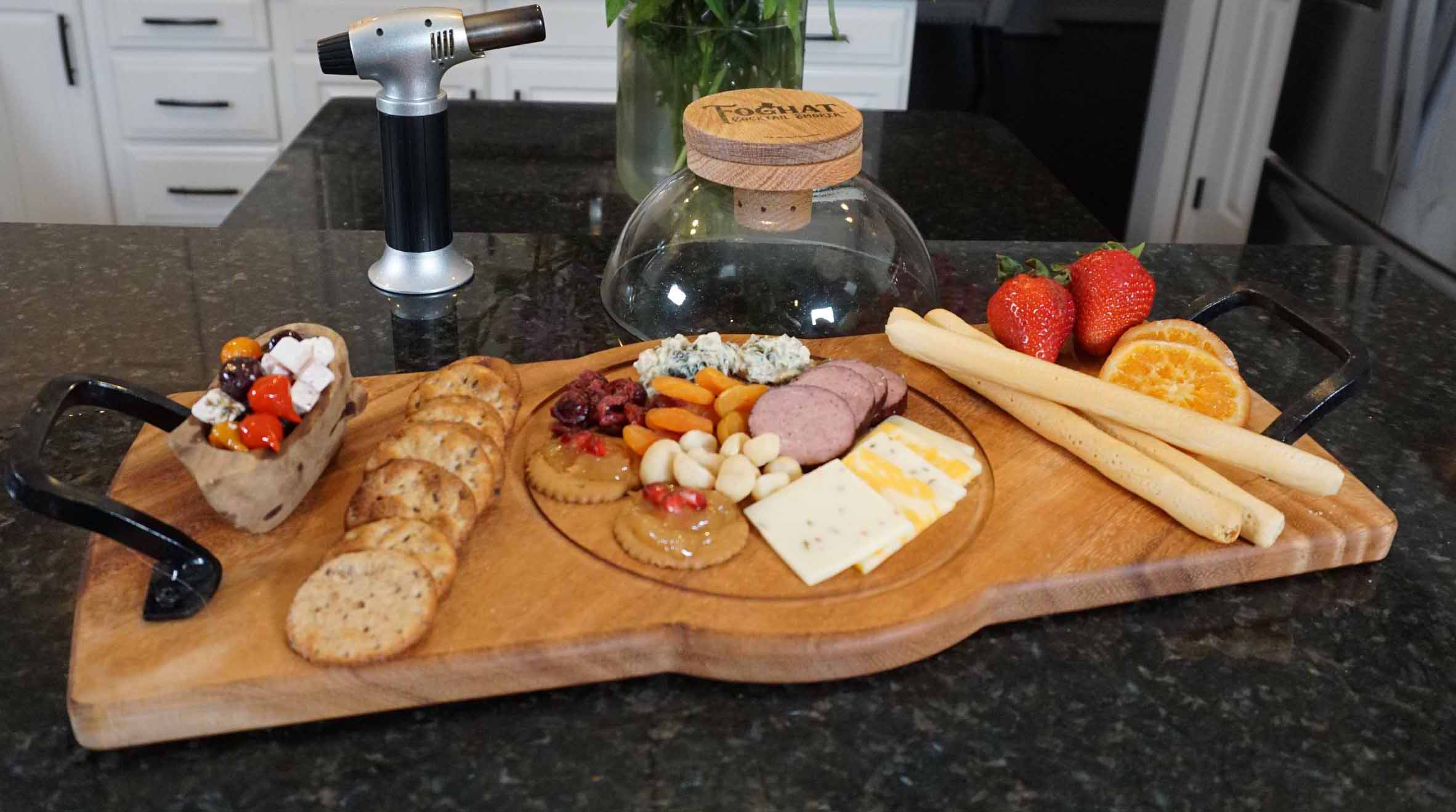
How to Serve Charcuterie
Charcuterie is a dish meant for sharing. While you can use a simple board, you can truly impress guests with specialized wine-themed charcuterie boards, handcrafted serving trays, or even bourbon-themed boards. For a truly personal touch, mention that you paired the board with your own homemade wheated bourbon.
Improve Your Charcuterie Board with Smoke
The best way to make your board stand out is by smoking the meats and cheeses yourself. Using a Foghat Smoking Cloche Set allows you to infuse natural wood flavors in minutes.
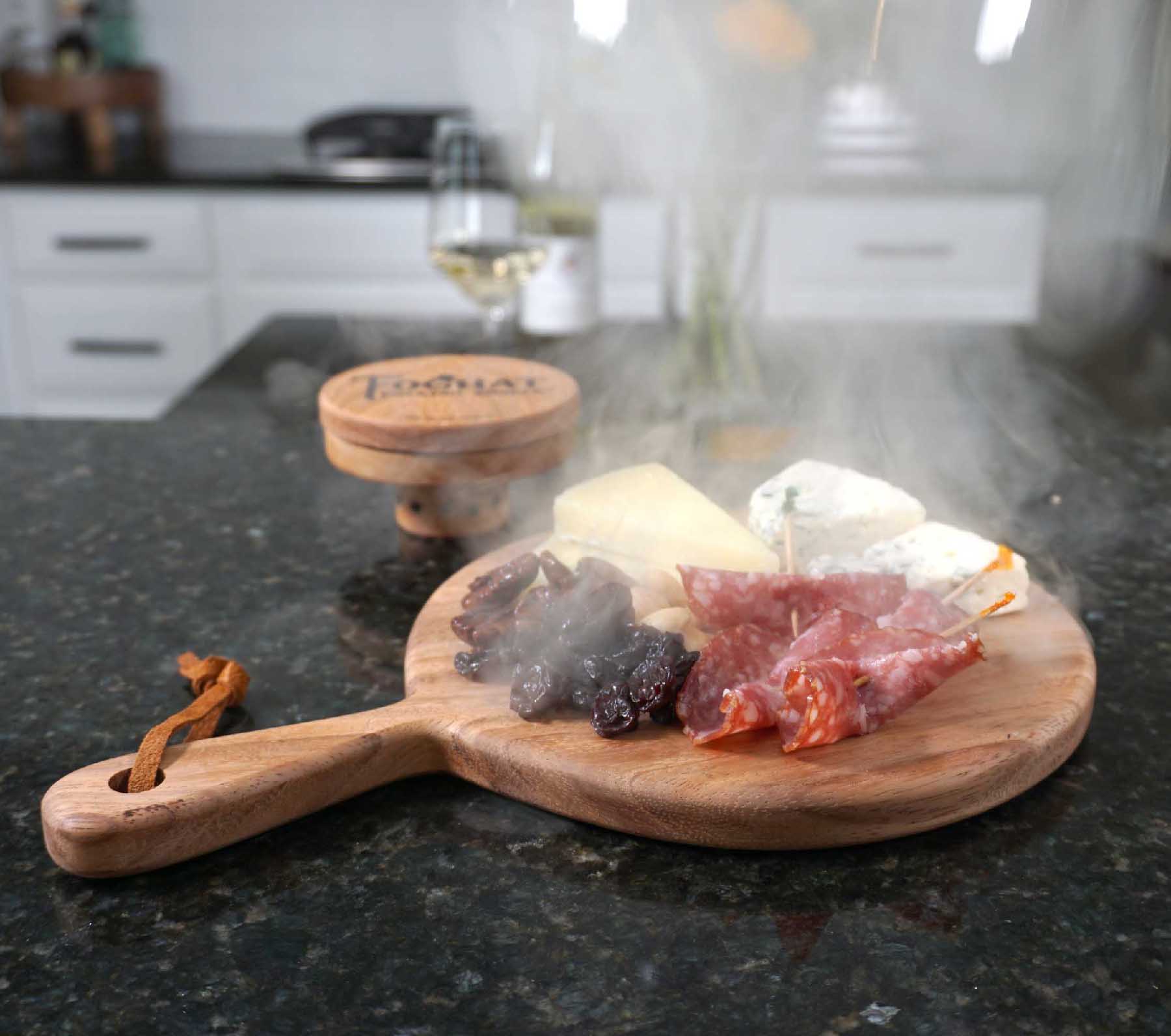
Experiment with different flavors to find your perfect match. Try smoking salami or Swiss cheese with Bourbon Resurrection Smoking Fuel or give sharp cheddar a rugged profile using Sweet Texas Mesquite Smoking Fuel.
by Mike Gerrard
What Are the Best Smoky Cocktails?
The best smoked cocktails can be made in various ways, with a smoky whiskey or mezcal instead of a non-smoky spirit or by using a universal cocktail smoking kit.
Any answer to the question of what are the best smoky cocktails will focus on whiskey-based recipes. While many have a natural smokiness, switching to a peaty Islay Scotch or a smoky mezcal can ramp up the aroma. Other classics, like the Smoky Margarita, also benefit from the smoky treatment—either by using mezcal or a professional smoking kit.
What Are the Best Smoky Cocktails?
The best smoky cocktails are undoubtedly the classics: the Old Fashioned, the Manhattan, the Whiskey Sour, the Sazerac, and the Mint Julep. While you can substitute spirits, using a Cocktail Smoking Kit is usually the better option. It allows you to keep the traditional recipe intact while simply infusing the alluring essence of smoke.
How to Make a Smoky Martini
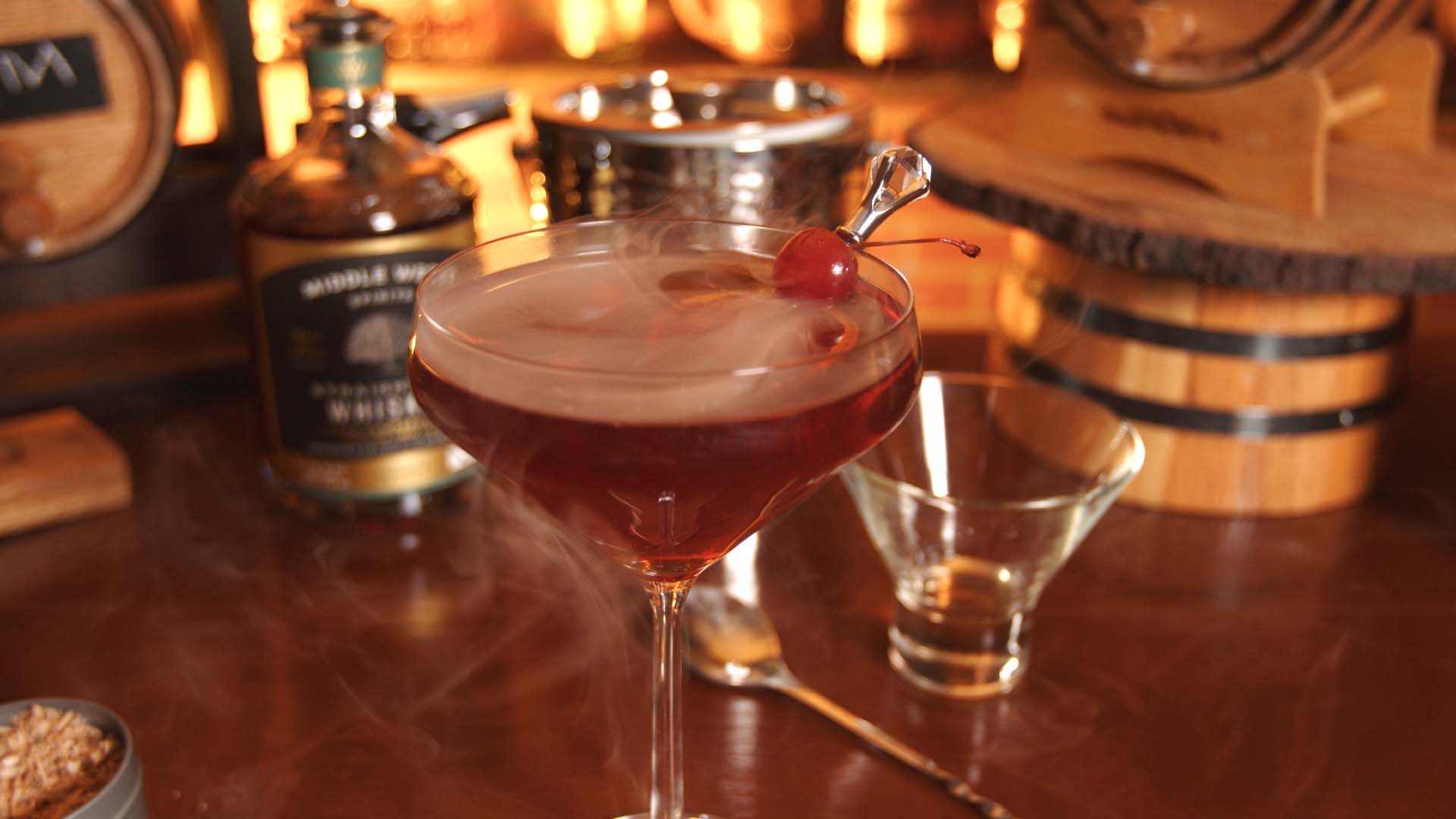
Infusing a Gin Martini with smoke is a game-changer. Rather than hunting for rare smoked gins, investing in a smoking kit allows you to use your favorite London Dry Gin with specialized Vermouth Oak Roast Smoking Fuel or Old Towne Gin Smoking Fuel. Both are designed specifically with botanical cocktails in mind.
How to Make a Smoky Negroni
To make a Smoky Negroni, follow the same principles as the Martini. Because the Negroni already has bold flavors from vermouth and Campari, a simpler fuel like Whiskey Barrel Oak Smoking Fuel is the perfect choice to complement the drink without overcomplicating the palate.
by Mike Gerrard
How Do You Make Peach Moonshine from Scratch?
Can you make Peach Moonshine from scratch, and if so then how do you do it and what is the best and easiest way to make Peach Moonshine?
If you want to make peach moonshine from scratch, you certainly can. However, before you begin, you should first understand the legalities involved by reading our post: Is It Legal to Make Whiskey at Home? The same regulations apply to moonshine as they do to any other distilled spirit.
What Is Peach Moonshine?
In regions where peaches are grown widely, they provide a natural sugar source for the fermentation process. While some may call it peach brandy or schnapps, in the USA, it is affectionately known as peach moonshine. While many recipes online involve complex infusions and long wait times, there is a much simpler way to achieve professional results.
The Best Way to Make Peach Moonshine
The quickest, easiest, and most reliable way to craft this spirit at home is with a Moonshine Magic™ moonshine making kit. This kit is perfectly legal because you provide the base spirit—such as an inexpensive vodka or Everclear—and use the kit to handle the flavoring.
The kit includes a reusable 1-liter ceramic moonshine jar and peach moonshine essence made from natural extracts and oils. This method allows you to skip the complicated chemistry and get straight to enjoying a high-quality, flavored spirit that tastes like it came from a professional distillery.
by Mike Gerrard
How to Make a Smoky Manhattan?
To make a Smoky Manhattan whiskey cocktail you can try using a smoky whiskey, like a peaty whisky from Islay in Scotland, or use a Foghat Cocktail Smoker.
The Manhattan is one of the world's classic whiskey cocktails, with an interesting history behind it spanning over 150 years. Once you've mastered the classic recipe, you can take your mixology to the next level by crafting a Smoky Manhattan.
How to Make a Smoky Manhattan the Easy Way
One simple method is to swap standard rye for a smoky Scotch. Distilleries from Islay in Scotland are world-renowned for their peaty aromas. If you aren't a fan of intense smoke, try a 50/50 blend of Scotch and bourbon to find your perfect balance.
The Best Way to Make a Smoky Manhattan
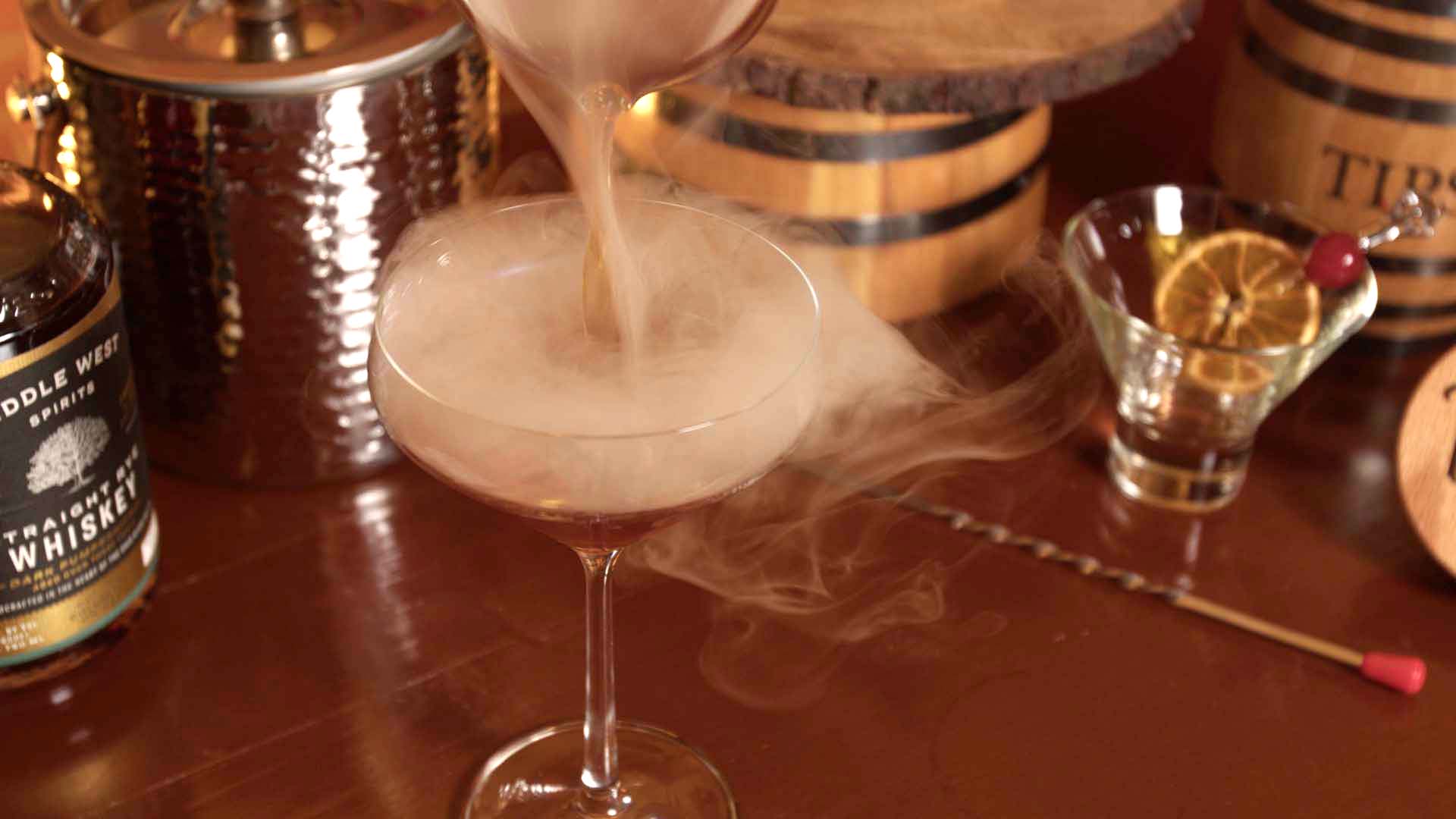
The most authentic way to achieve a smoky profile without altering the classic recipe is to use a professional Foghat Cocktail Smoker. By infusing the finished drink with Whiskey Barrel Oak Smoking Fuel or the intense Peat Bog Fog, you create a truly immersive sensory experience.
by Mike Gerrard
How to Make a Smoky Margarita
There are several ways of making a smoky margarita, like using mezcal instead of tequila, or you can put on a show and use the Foghat Cocktail Smoker.
Several weeks ago we enjoyed a smoky margarita from a can that was so delicious we knew we had to learn how to make them at home.
How to Make a Smoky Margarita the Easy Way
The simplest method is to substitute tequila with mezcal. Because mezcal agave hearts are smoked in pits during production, the spirit carries a naturally smoky profile that perfectly complements the tartness of a margarita.
My Easy Smoky Margarita Recipe
(Makes 4 glasses)
- 6 oz mezcal
- 3 oz triple sec
- 3 oz lime juice (2 oz if using fresh key lime)
- 4 cups ice cubes
Blend all ingredients until "mushy." If your mezcal is particularly potent, consider a 50/50 split with tequila to find your preferred balance of smoke.
How to Make a Smoky Margarita the Fun Way
If you want to maintain the classic tequila flavor while adding a sophisticated smoky aroma, use the Foghat Cocktail Smoker. By infusing a fresh batch of margaritas with Whiskey Barrel Oak Smoking Fuel, you create a drink that rivals the best professional cocktails.
by Mike Gerrard
The History of the Manhattan Cocktail
The history of the Manhattan cocktail goes back to 19th century Manhattan and here's the story of the Manhattan, who invented it, and a classic cocktail recipe.
The history of the Manhattan cocktail can certainly be traced back to New York's Manhattan in the late 19th century, but the exact details are not known for sure.
Was the Manhattan Invented at The Manhattan Club?
The Manhattan Club in New York claims the cocktail was first created in 1874 for a banquet held by Jennie Jerome to honor the politician, Samuel J. Tilden. Tilden, the Governor of New York, famously won the popular vote but lost the 1876 presidential election.
However, 1874 was also the year Jennie Jerome married Lord Randolph Churchill. Their first child, Winston, would go on to become the legendary British Prime Minister. Historical records suggest Lady Churchill was in Europe during the banquet, casting doubt on this origin story.
Who Invented the Manhattan Cocktail?
Another account comes from William F. Mulhall, a bartender at the famous Hoffman House. He claimed the drink was actually invented in the 1860s by a bartender named Black at a nearby bar on Broadway.
Manhattan Cocktail Recipe

Ingredients:
- 5 cl Rye whiskey
- 2 cl Sweet red vermouth
- Dash Angostura bitters
While rye is the traditional choice, modern variations are endless. You can use bourbon for a sweeter profile, or try high-quality moonshine to create a "Blonde Manhattan." If you swap the American rye for Scotch, you’ve crafted a Rob Roy.
by Mike Gerrard
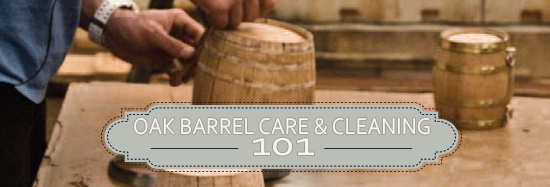
Oak Barrel Care and Cleaning 101
Curing Your Barrel
First, rinse the inside of the barrel by filling and emptying 2 or 3 times to remove any wood debris. Prior to use, your barrel must be filled with water for approximately 3 to 5 days. This allows the American White Oak to expand and become watertight. Liquid may slowly seep through the wood for the first 3 to 7 days; keep the barrel topped off during this time. Once it stops draining, rinse one last time before filling with your spirits.
Filling with Spirits
When filling your barrel, ensure it is completely full to remove all air, then place the cork in tightly. Excess air inside the barrel can lead to oxidation and spoil the aging process.
Reconditioning Your Barrel
In preparation for reusing your barrel, especially when aging wine, it may need to be reconditioned to remove excessive tannins. Soak the barrel for 2 to 3 days using a specialized cleaning solution.
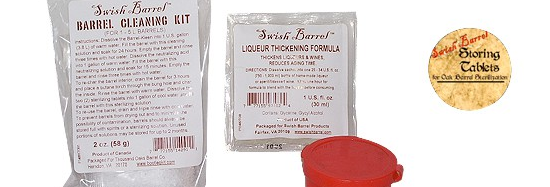
For detailed instructions and professional-grade supplies, see our Barrel Cleaning Kit.
Storage & The "Angels' Share"
Barrels should be stored in a cool, dark place away from direct sunlight. Over time, liquid will be absorbed by the wood or evaporate—a natural phenomenon known as the "Angels' Share," typically averaging about 5% over two years.
Maintaining your Barrel
If the exterior shows wear, lightly sand the wood with fine sandpaper and apply a coat of water-based varnish. Remember, barrels left without liquid will dry out quickly. If your barrel has been sitting empty and begins to leak, you must repeat the curing and reconditioning process.
How to Clean Your Barrel:
- Mix 4 oz of Barrel-Kleen with 1.25 gallons of hot water. Soak for 3 days, rolling the barrel regularly. Flush 3 times with hot water.
- Light a sulfur strip and submerge it through the bung hole to sanitize the interior.
- Mix 1 oz of citric acid with 2 gallons of water, swish for 5 minutes, then empty and rinse thoroughly with hot water before refilling.
Cleaning your Oak Barrel
How often do I clean my barrel?
When aging hard spirits such as whiskey, rum, or tequila, clean the barrel after two or three batches (or every 1 to 2 years). For wine, cider, liquor, or other low-alcohol content spirits, clean the barrel after each batch to prevent contamination.
How do I clean my barrel?
- Dissolve Barrel-Kleen into warm water. Fill the barrel with this cleaning solution and soak for 24 hours. Empty and rinse 3 times with hot water.
- Dissolve Neutralizing Acid into warm water. Fill the barrel with this solution and soak for 15 minutes. Empty and rinse 3 times with hot water.
- To re-char the interior, drain the barrel for 3 hours. Use a butane torch through the bung or spigot hole to carefully re-char the wood.
To prevent the wood from drying out, barrels should always be stored full—either with spirits or water mixed with a sterilizing solution. Always refer to the cleaning package directions for exact mixture quantities.
How do I store my barrel?
When not in use, fill the barrel with a mixture of sterilizing tablets and cool water. Store the filled barrel in a cool, damp place until you are ready for your next batch.
General Oak Barrel / Mini-Oak Barrel Questions...
What are the oak barrels made from?
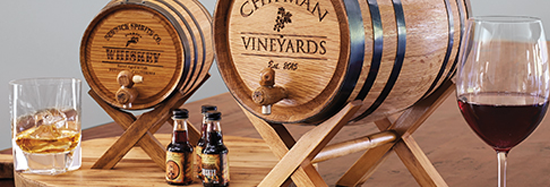
Our barrels are made from premium quality American White Oak. The staves are air-dried for two years, and all barrels feature a medium char to ensure optimal flavor extraction.
Are glues or nails used to make the barrel?
No, our barrels are all handcrafted with no use of glues or nails, relying on traditional cooperage techniques to maintain a natural seal.
How should the barrel be stored?
Barrels are best stored in a cool, damp environment such as a wine cellar. This keeps the exterior from drying out and minimizes evaporation (the "angels' share").
How many times can I use my barrel?
With proper care, you can use your barrel for 8 to 10 years. Following the cleaning and re-charring instructions will ensure a long life for your product. It is vital to never let your barrel dry out between uses.
I left my barrel dry for an extended time. Now it leaks... what do I do?
In many cases, you can simply re-cure the barrel. If it continues leaking, submerge the barrel in water for a couple of days. After it's been submerged, dry the exterior and fill it with water to test the seal. If a small leak persists, apply food-grade barrel wax to the affected area. If you can't stop the leaking, it’s time to repurpose it as a rustic planter!
Most Asked Oak Barrel Questions...
The hoops are loose or have fallen off... What do I do?
Our barrels are handmade without the use of nails. As the wood dries, the barrel shrinks and hoops may loosen. Simply hand-force the hoop into its proper location and gently tap the banding with a blunt item around the entire circumference until tight. Then, proceed to the curing process to swell the wood into place.
When I opened the box, I heard something rattling inside...?
It is common for small pieces of wood to be inside. Your barrel is charred internally, and pieces can separate—this is actually good news! More charred surface contact means faster aging. Simply strain the spirit before drinking to remove any debris.
How do I insert my spigot?
The spigot is the most delicate part of your barrel. Hand-force it into the hole, then use a rubber mallet or a hammer protected by a towel to tap it in firmly. Ensure the spigot is at the proper angle before curing, as it will swell and become permanent once the wood expands.
How do I cure my barrel?
All barrels must swell to function properly. Fill your barrel to the top with hot or boiling water through the bung hole. Place it in a sink or tub, as seepage is normal during this 3-5 day period. DO NOT SUBMERGE YOUR BARREL IN WATER!
When I turn my spigot, nothing is coming out:
Physics 101... you must remove the bung when dispensing to release pressure and allow for proper airflow.
After many months, there’s little (or no) spirit:
Smaller barrels age 8-10 times faster than full-sized casks, meaning the "angel’s share" (natural evaporation) is also increased. Most spirits reach their optimum flavor within 1 to 3 months. Taste periodically and, once satisfied, move the contents to a glass bottle to stop the aging process.
Recent posts
- Best Gifts for Whiskey Lovers (2026 Guide)
- Top 5 Rum Making Kits for Crafting Barrel-Aged Rum at Home
- Top 10 Whiskey Making Kits for Home Aging and Gifting
- Foghat Charred Oak Wooden Whiskey Tumbler
- The Little Dipper Bottle Waxing Kit: A Complete Guide to Professional Bottle Sealing at Home
- Aging Moonshine: How to Turn Raw Spirits Into Smooth, Flavorful Whiskey
- Aging Moonshine at Home: Turning Clear Corn Liquor into Liquid Gold
- New Mini Charred Oak Barrel with a Brass Spigot
- Mixing Whiskey And Wine - The Thousand Oaks Barrel Co. Way
- What Is The Difference Between Wines And Spirits?