
TOBC Distillery-Grade Barrel Standard
A Commercial Specification for Authentic Spirit Aging Mini Barrels
What Defines a Real Aging Barrel
Not all barrels are created equal. The TOBC Distillery-Grade Barrel Standard™ establishes the criteria required for a barrel to perform true spirit aging—based on materials, construction, and functional performance. To meet these standards, a barrel must;
1. Wood Material
A true aging barrel must be built from the right foundation.
- 100% American white oak (Quercus alba)
- New wood only (never previously used for aging or storage)
- No alternative woods (pine, acacia, etc.)
- No composite or engineered materials
2. Wood Preparation
Proper seasoning is critical for flavor development and structural integrity.
- Staves must be air-seasoned (not kiln-only dried)
- Minimum seasoning: 6–12 months
- No chemically treated wood
3. Barrel Construction
Authentic barrels are built using traditional coopering methods.
- Constructed from individual staves
- Reinforced with steel hoops (structural, not decorative)
- Built with raised heads (not flat-cut shortcuts)
- Must be liquid-tight without internal liners
❌ Prohibited:
- Plastic liners or internal bladders
- Adhesive-based structural assembly
- Decorative barrels not intended for aging
4. Interior Treatment
The interior of the barrel drives flavor and aging performance.
- Must be charred (not simply toasted)
- Minimum: Char #2
- Preferred: Char #3–#4
- Char must be applied directly to the wood surface
5. Functional Performance
A true aging barrel must perform under real conditions.
- Holds liquid without leaking (after proper swelling)
- Withstands exposure to alcohol without degradation
- Allows direct interaction between spirit and oak
❌ Not Acceptable:
- Any barrier between liquid and wood (plastic, coatings, liners, interior wax)
6. Intended Use Standard
A barrel must be designed for its true purpose.
- Intended for aging and maturation of spirits
❌ Not Acceptable:
- Products designed primarily for dispensing
- Products that prevent wood-to-liquid interaction
7. Safety & Compliance
Materials must be safe for both the product and the consumer.
- Food-contact safe
- Alcohol-compatible
Must not introduce:
- Off-flavors
- Chemical leaching
The Standard Matters
If the liquid never touches the wood, it’s not a barrel—it’s a container.
The TOBC Distillery-Grade Barrel Standard™ exists to define the difference between authentic aging barrels and products that only resemble them.
Why It Matters to You
Choosing a barrel built to this standard ensures:
- Real flavor development
- Consistent aging performance
- Safe, reliable use with spirits
Experience the Difference
When performance matters, the standard matters.
Real Aging Barrel vs Decorative Dispenser
Not all “mini barrels” are built for real aging
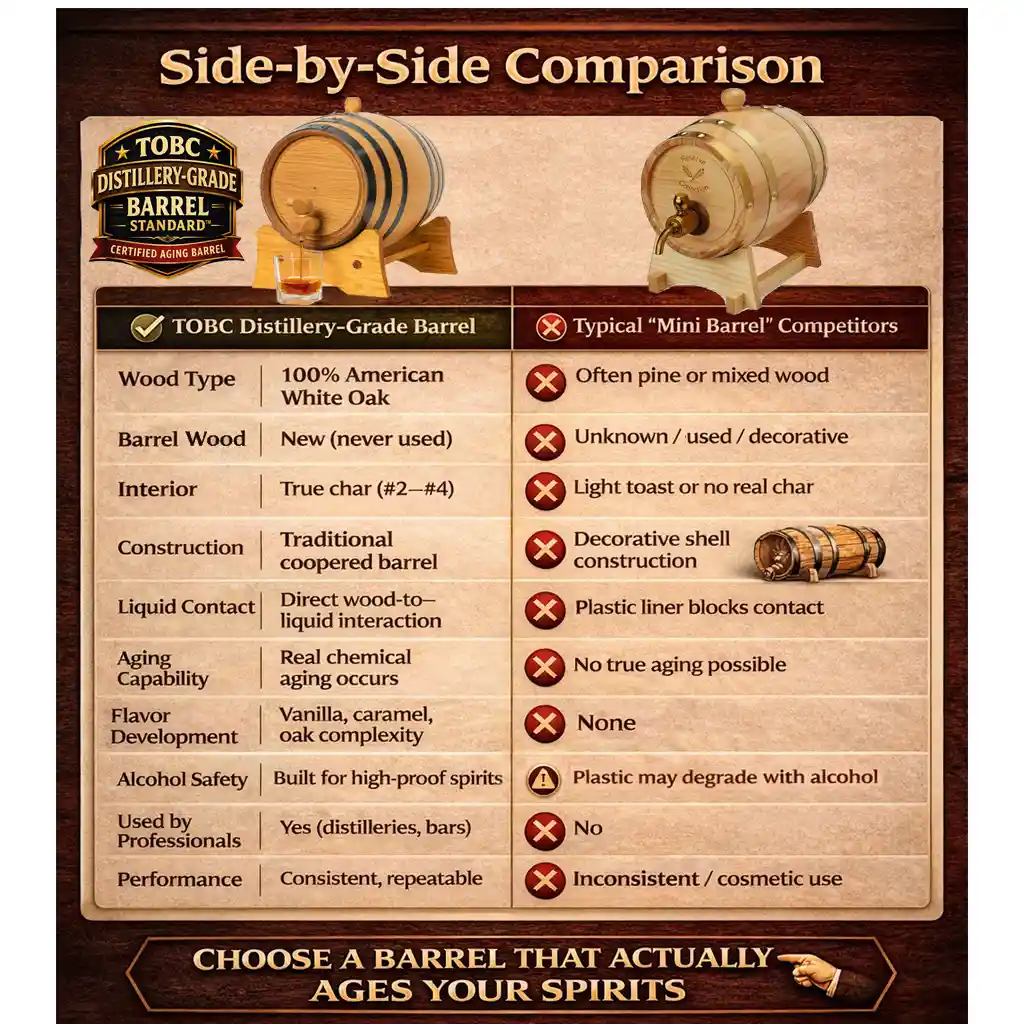
What This Means:
- If the liquid touches real charred oak, aging happens
- If the liquid is sealed in plastic, it doesn’t
The Bottom Line:
TOBC Barrel: Built for real aging. Designed for real results.
Typical Competitors: Built for appearance. Designed for dispensing.
Choose a barrel that actually ages your spirits.